
Newborn Baby Care Guide
Everything First-Time Parents Need to Know (0–3 Months)
A complete guide to feeding, bathing, sleeping, skincare, hygiene, safety and healthy newborn development.
Welcoming a newborn into your family is one of life’s most beautiful experiences. But for first-time parents, those first few weeks can also bring countless questions. How often should you feed your baby? When should you give the first bath? How do you clean the umbilical cord? What is the safest sleeping position? Which baby care products are actually necessary?
Newborns require gentle, consistent care because their bodies are still adapting to life outside the womb. Their skin is delicate, their immune systems are developing, and they depend entirely on caregivers for feeding, warmth, hygiene and protection.
The good news is that newborn care does not have to be complicated. Understanding a few essential practices can help parents create a safe, comfortable and nurturing environment.
In this comprehensive newborn baby care guide, BEBUNARA explains everything first-time parents should know about caring for a baby from birth to three months, including practical daily routines, essential baby products, common newborn concerns and important safety precautions.
Whether you are preparing for your baby’s arrival or already caring for a newborn at home, this guide will help you feel more confident.
1. Understanding Your Newborn Baby (0–3 Months)
The first three months of life are often called the newborn or early infancy period. During this time, babies experience rapid physical, sensory and developmental changes.
Newborns are adjusting to breathing, feeding, regulating their body temperature, digesting milk and responding to their surroundings.
Some common characteristics of newborns include:
- Frequent feeding: Newborns have small stomachs and need to feed regularly.
- Irregular sleep patterns: They sleep for several periods throughout the day and night.
- Sensitive skin: Their skin barrier is still developing and can be easily irritated.
- Limited head control: Their neck muscles are not yet strong enough to support their heads independently.
- Frequent crying: Crying is one of the primary ways babies communicate their needs.
- Developing senses: Babies gradually become more responsive to voices, light, touch and movement.
Every baby develops at an individual pace. Premature babies and babies with specific medical needs may require additional care and monitoring.
2. Feeding Your Newborn Baby: Breastfeeding and Formula Feeding
Feeding is one of the most important aspects of newborn care. Proper nutrition supports healthy growth, brain development and immune function.
Breastfeeding a newborn
Breast milk is recommended as the primary source of nutrition for most newborns.
The World Health Organization recommends exclusive breastfeeding for approximately the first six months, followed by appropriate complementary foods while continuing breastfeeding.
During the first few weeks, babies commonly breastfeed around 8–12 times within 24 hours. Some babies may feed more frequently, particularly during growth spurts.
Practical breastfeeding tips:
- Feed your baby whenever they show hunger cues.
- Look for early signs such as rooting, hand-to-mouth movements and increased alertness.
- Try to establish a comfortable feeding position.
- Ensure your baby’s mouth takes in a good portion of the areola, not just the nipple.
- Allow your baby to finish feeding and watch for signs of fullness.
- Ask a lactation consultant or healthcare professional for help if feeding is painful or difficult.
Do not wait until your baby cries intensely before offering a feed. Crying is often a later hunger signal.
How do you know if your baby is getting enough milk?
Look for several signs together:
- Regular feeding throughout the day and night.
- Audible swallowing during breastfeeding.
- Increasing wet nappies as feeding becomes established.
- The baby appears satisfied after many feeds.
- Steady weight gain after the initial newborn weight changes.
Your healthcare professional can monitor weight and feeding progress.
Formula feeding
Some families use infant formula exclusively or alongside breastfeeding. Properly prepared commercial infant formula can provide the nutrition a baby needs.
Important precautions:
- Choose an age-appropriate infant formula.
- Follow the manufacturer’s preparation instructions exactly.
- Use safe water and appropriate hygiene.
- Never dilute formula with additional water.
- Never use homemade infant formula.
- Do not microwave bottles because uneven heating can cause burns.
- Follow the instructions for storage and disposal of prepared formula.
Powdered infant formula is not sterile. For newborns, particularly premature or medically vulnerable babies, preparation and sterilisation precautions are especially important. Ask your healthcare professional about the safest preparation method in your country.
Important: Do not give newborns ordinary cow’s milk, honey, fruit juice, tea or water as substitutes for breast milk or infant formula. Follow your paediatrician’s advice regarding supplements and special nutritional requirements.
Does a newborn need vitamin D?
Some babies need vitamin D supplementation, particularly exclusively breastfed babies and those receiving limited amounts of formula. Recommendations vary by country and feeding pattern.
Consult your baby’s paediatrician about the correct dose and when to begin. Never give supplements without checking the appropriate product and dosage.
3. Newborn Baby Sleeping Habits and Safe Sleep
Newborns spend a significant portion of their day sleeping. However, their sleep cycles are shorter and less predictable than those of adults.
Some babies sleep for two or three hours at a time, while others wake more frequently for feeding and comfort.
Establishing a safe sleep environment is more important than trying to establish a strict sleep schedule.
What is the safest sleeping position for a newborn?
Always place your baby on their back for every sleep, including daytime naps and nighttime sleep.
This is one of the most important newborn safety recommendations.
Follow these safe sleep practices:
- Place your baby on their back.
- Use a firm, flat and level mattress designed for infant sleep.
- Keep pillows, blankets, quilts and stuffed toys out of the sleep space.
- Do not use soft mattresses, inclined sleepers or sleep positioners.
- Keep your baby’s sleeping area in your room but on a separate sleep surface.
- Avoid overheating and keep your baby’s head uncovered during sleep.
Room-sharing without bed-sharing is recommended. A separate cot, crib or bassinet provides a safer sleeping space.
Never leave your newborn sleeping unattended on an adult bed, sofa or armchair.
Should you use a baby swaddle?
Swaddling may help some newborns feel settled, but it must be done correctly.
If you choose to swaddle:
- Use a lightweight, breathable material.
- Keep the baby’s hips and legs free to bend and move.
- Avoid tight wrapping around the chest.
- Always place the baby on their back.
- Stop swaddling as soon as the baby shows signs of attempting to roll.
Never use weighted swaddles or weighted blankets.
Newborn sleep environment
A comfortable environment generally includes:
- A well-ventilated room.
- Comfortable room temperature.
- Appropriate lightweight clothing.
- A firm, flat sleep surface.
- Minimal noise and harsh lighting.
Do not rely on pillows, thick blankets or soft toys to make a newborn’s sleeping area comfortable.
4. How to Bathe a Newborn Baby Safely
Bathing is an important part of baby hygiene, but newborns do not need a full bath every day.
Their skin is delicate, and frequent bathing with soap or fragranced products can contribute to dryness and irritation.
The World Health Organization recommends delaying the first bath for at least 24 hours after birth when possible.
How often should you bathe a newborn?
A few baths per week are generally sufficient for many newborns. Between baths, parents can gently clean the baby’s face, neck, hands and nappy area as needed.
Step-by-step newborn bathing guide
Step 1: Prepare everything
Keep the following items ready:
- A baby bathtub or suitable clean bathing area.
- A soft baby towel.
- Clean washcloths.
- A fresh nappy.
- Clean baby clothes.
- A suitable mild cleanser, if needed.
Step 2: Check the water temperature
Use comfortably warm water, not hot water. Check the temperature before placing your baby in the bath.
Step 3: Support your baby’s head and neck
Newborns cannot independently support their heads. Keep one hand supporting the head and neck throughout bathing.
Step 4: Clean gently
Use a soft cloth and gentle movements. Clean the face first, followed by the body and nappy area.
Step 5: Dry carefully
Pat the skin gently with a soft towel. Pay attention to the neck, armpits, groin and other skin folds.
Step 6: Dress your baby
Put on a clean nappy and comfortable clothes.
Never leave your baby alone in water, even for a few seconds. If you need to leave, take your baby with you.
Sponge bathing before the umbilical cord falls off
Until the umbilical cord stump separates and the area heals, sponge bathing is a practical option.
Keep the cord clean and dry and avoid prolonged soaking.
5. Newborn Baby Skincare: Protecting Delicate Skin
Newborn skin is more delicate than adult skin. It is still developing its protective barrier, making it more susceptible to dryness, irritation and certain product ingredients.
A simple skincare routine is generally better than applying multiple products.

Basic newborn skincare routine
1. Gentle cleansing
Use lukewarm water and, when necessary, a mild, fragrance-free cleanser formulated for newborns.
Avoid harsh soaps, strong fragrances and unnecessary antibacterial products.
2. Baby moisturiser
If your baby’s skin appears dry, ask your healthcare professional about using a simple, fragrance-free baby moisturiser.
Apply only a small amount and observe how the skin responds.
3. Nappy area care
Change wet or soiled nappies regularly.
Clean the area gently and allow it to dry before putting on a fresh nappy. A suitable barrier cream may help protect skin that is prone to irritation.
4. Skin folds
Gently clean and dry the neck, armpits, groin and other skin folds.
Moisture trapped in these areas can contribute to irritation.
Common newborn skin conditions
Newborns can experience several temporary skin changes.
| Skin condition | What parents may notice |
|---|---|
| Baby acne | Small pimples on the face |
| Dry skin | Flaking or rough patches |
| Cradle cap | Yellowish or flaky scalp scales |
| Erythema toxicum | Temporary red spots or blotches |
| Nappy rash | Redness around the nappy area |
Many newborn skin conditions improve naturally, but persistent, spreading, painful or infected-looking rashes should be assessed by a healthcare professional.
Avoid applying adult skincare products, medicated creams, essential oils or home remedies without medical advice.
6. Umbilical Cord Care: How to Clean a Newborn’s Belly Button
The umbilical cord stump is the remaining part of the cord attached to your baby’s belly button after birth.
It usually dries, changes colour and falls off naturally within approximately one to three weeks.
Proper care helps reduce the risk of infection.
How to care for the umbilical cord
- Wash your hands before touching the area.
- Keep the cord stump clean and dry.
- Allow air to circulate around the stump.
- Fold the front of the nappy below the cord.
- If it becomes dirty, gently clean with clean water and dry thoroughly.
- Allow the stump to fall off naturally.
What should you avoid?
Do not:
- Pull or twist the stump.
- Apply oil, powder or cream without medical advice.
- Cover it tightly with a bandage.
- Attempt to remove it before it separates naturally.
Some healthcare systems recommend antiseptic cord care in specific circumstances. Follow your local medical professional’s instructions.
Signs of a possible umbilical cord infection
Seek prompt medical assessment if you notice:
- Redness spreading onto the surrounding skin.
- Swelling around the belly button.
- Pus or foul-smelling discharge.
- Persistent bleeding.
- Fever or an unwell-looking baby.
Do not ignore these symptoms.
7. Newborn Baby Grooming: Hair, Nails, Eyes and Ears
Newborn grooming should be gentle and limited to what is necessary for hygiene and comfort.
Baby hair care
Newborn hair can be soft, fine and uneven. Some babies lose part or most of their initial hair during the first few months.
For basic hair care:
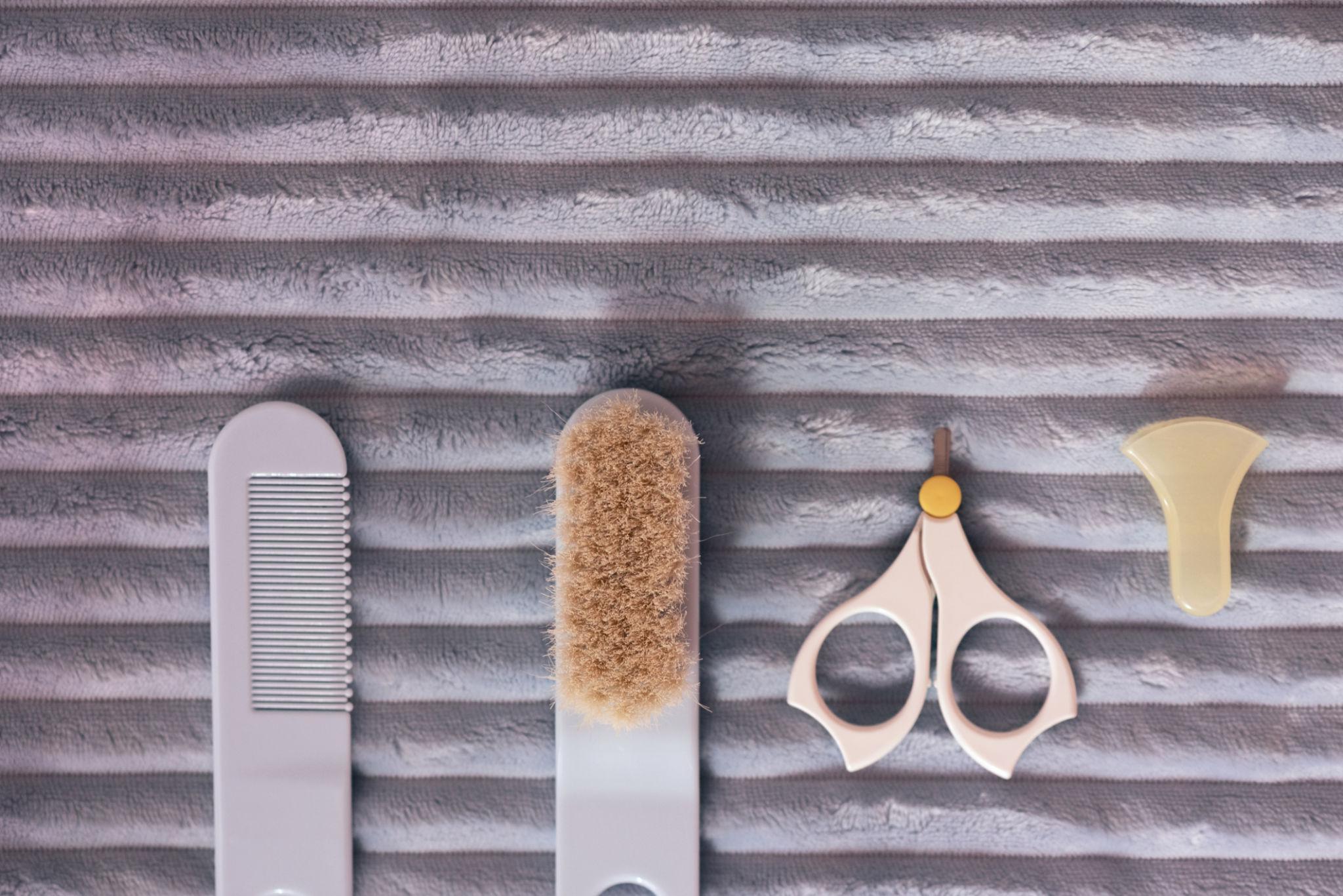
- Use a soft baby hairbrush.
- Avoid vigorous brushing.
- Clean the scalp gently.
- Do not forcefully remove cradle cap.
- Avoid applying unnecessary hair oils or strong products.
Baby nail care
Newborn fingernails are soft but can be surprisingly sharp.
To prevent accidental scratching:
- Check the nails regularly.
- Use an appropriate baby nail file or baby nail clippers.
- Trim carefully when the baby is calm.
- Avoid cutting too close to the skin.
If you are uncomfortable trimming newborn nails, ask a healthcare professional to demonstrate the correct technique.
Baby eye care
Clean visible discharge gently using clean water and a fresh clean cloth or cotton pad for each eye.
Do not apply homemade eye drops or medication without medical advice.
Persistent discharge, redness or swelling should be assessed by a healthcare professional.
Baby ear care
Clean only the outside of the ears using a soft, damp cloth.
Never insert cotton buds, fingers or other objects into the ear canal.
8. Newborn Nappy Changing and Hygiene
Newborns need frequent nappy changes because they pass urine and stools regularly.
Keeping the nappy area clean and dry helps prevent irritation and nappy rash.
How to change a newborn’s nappy
- Place your baby on a clean, safe changing surface.
- Keep one hand on your baby at all times.
- Remove the soiled nappy.
- Clean the area gently from front to back.
- Allow the skin to dry.
- Apply an appropriate barrier cream if needed.
- Put on a fresh, correctly fitted nappy.
Never leave a baby unattended on a raised changing surface.
Disposable vs reusable nappies
Both disposable and reusable cloth nappies can be suitable when used and maintained correctly.
| Feature | Disposable nappies | Reusable cloth nappies |
|---|---|---|
| Convenience | Generally convenient | Require washing |
| Maintenance | Regular disposal | Cleaning and drying |
| Initial expense | Usually lower | Often higher |
| Long-term expense | Ongoing purchases | May reduce costs over time |
| Environmental impact | Creates disposable waste | Depends on washing and reuse practices |
Choose the option that suits your baby’s skin, your family’s routine and your ability to maintain hygiene.
How to prevent nappy rash
- Change nappies frequently.
- Clean the skin gently.
- Avoid excessive rubbing.
- Allow the skin to dry.
- Use a suitable barrier cream when needed.
- Avoid fragranced products if they irritate your baby’s skin.
If the rash persists, spreads, develops blisters or appears infected, consult a paediatrician.
9. Keeping Your Newborn Baby Warm and Comfortable
Newborn babies have difficulty regulating their body temperature compared with older children and adults.
Maintaining a comfortable temperature is particularly important during the first few weeks.
How should you dress a newborn?
A practical starting point is to dress your baby in approximately one additional light layer compared with what a comfortable adult would wear in the same environment.
However, clothing requirements depend on room temperature, climate, season and your baby’s health.
Useful newborn clothing includes:
- Soft cotton bodysuits.
- Comfortable sleepsuits.
- Lightweight caps when appropriate.
- Breathable clothing.
- Weather-appropriate outer layers.
Avoid excessive layering.
Check your baby’s chest or back to assess warmth rather than relying only on their hands and feet, which can naturally feel cooler.
Skin-to-skin contact
Skin-to-skin contact involves placing your baby directly against your bare chest while ensuring the baby’s airway remains clear.
It can support bonding, breastfeeding and temperature regulation.
Always remain awake and alert during skin-to-skin contact. If you feel sleepy, place your baby in their safe sleep space.
10. Newborn Baby Massage: Benefits and Precautions
Gentle touch and massage can be a comforting way to bond with your newborn.
Some parents include gentle massage in their daily routine after the baby has settled into feeding and sleeping patterns.
Potential benefits include:
- Encouraging parent-baby bonding.
- Providing comforting physical contact.
- Helping parents become familiar with their baby’s body language.
- Creating a relaxing bedtime routine.
However, massage is not a treatment for medical conditions and should never involve forceful pressure.
How to massage a newborn safely
- Choose a time when your baby is calm and alert.
- Ensure the room is comfortably warm.
- Wash your hands.
- Use gentle, slow strokes.
- Avoid pressure on the head, spine, joints and abdomen.
- Stop if your baby appears uncomfortable or distressed.
If using a massage oil, discuss suitability with your healthcare professional. Avoid essential oils, fragranced products and untested homemade mixtures.
Do not massage areas affected by rashes, wounds or infection.
11. Newborn Development: What Happens During the First Three Months?
The first three months are an exciting period of growth and adaptation.
Babies gradually become more responsive to their surroundings and begin developing new movements and communication patterns.
Month 1: Adjustment to the outside world
During the first month, your baby may:
- Sleep for much of the day.
- Feed frequently.
- Respond to familiar voices.
- Show reflex movements.
- Focus briefly on nearby faces.
- Cry to communicate discomfort or needs.
Month 2: Increasing awareness
Many babies begin to:
- Look more closely at faces.
- Respond more actively to sounds.
- Show early social smiles.
- Make small sounds other than crying.
- Move their arms and legs more purposefully.
Month 3: Growing interaction
By around three months, many babies may:
- Show increased interest in faces.
- Follow nearby objects with their eyes.
- Make more cooing sounds.
- Hold their heads more steadily during supervised activities.
- Respond to familiar voices.
Developmental milestones vary. Premature babies may need milestone assessment using corrected age.
Why is tummy time important?
Tummy time means placing your baby on their stomach while they are awake and directly supervised.
It helps develop neck, shoulder and upper-body muscles.
Start with short sessions and gradually increase the duration as your baby becomes comfortable.
Remember: Tummy time is only for awake, supervised periods. Always place your baby on their back for sleep.
12. Essential Baby Products Every First-Time Parent Should Consider
Preparing a newborn essentials kit before delivery can make the first few weeks more organised.
However, parents do not need to purchase every baby product available in the market.
Prioritise products that support safety, feeding, hygiene and comfort.
Newborn baby essentials checklist
| Category | Useful products |
|---|---|
| Clothing | Cotton bodysuits, sleepsuits, soft clothing |
| Feeding | Feeding bottles if needed, breast pump if needed, burp cloths |
| Bathing | Baby bathtub, soft washcloths, hooded towel |
| Skincare | Gentle cleanser, suitable moisturiser if needed |
| Grooming | Soft baby brush, baby nail file |
| Hygiene | Newborn nappies, wipes or cotton pads, changing mat |
| Sleeping | Safety-compliant cot or bassinet, firm mattress, fitted sheet |
| Health | Digital thermometer, prescribed medicines if applicable |
| Travel | Properly fitted, age-appropriate infant car seat where required |
How to choose safe baby care products
Before purchasing a baby product, consider the following:
1. Age suitability
Check the manufacturer’s recommended age and intended use.
2. Ingredients
For skincare products, look for simple formulations and avoid unnecessary fragrances or ingredients that may irritate sensitive skin.
3. Safety certifications
Check whether the product complies with applicable safety standards in the country where it is sold.
4. Product instructions
Read instructions and warnings before using grooming tools, feeding accessories or baby equipment.
5. Brand transparency
Prefer brands that clearly disclose ingredients, manufacturer details, product specifications and safety information.
6. Product recalls
Check relevant product safety notices and recall information before purchasing or using baby equipment.
A popular product is not automatically a safe or necessary product for every newborn.
13. Common Newborn Baby Problems and What Parents Should Know
New parents often worry about normal newborn behaviours. Understanding common concerns can help parents respond appropriately.
Baby crying frequently
Crying is a normal form of communication.
Possible reasons include:
- Hunger.
- A wet or dirty nappy.
- Tiredness.
- Temperature discomfort.
- Need for closeness.
- Overstimulation.
- Discomfort or illness.
Try checking your baby’s basic needs and providing gentle comfort.
Never shake a baby. If crying becomes overwhelming, place the baby safely in their cot and ask another trusted adult for help.
Newborn hiccups
Hiccups are common in newborns and are usually harmless.
They may occur during or after feeding.
If your baby seems comfortable, they generally do not require treatment.
Baby spit-up
Small amounts of milk coming back up after feeding are common in young babies.
Helpful practices include:
- Feeding calmly.
- Allowing breaks for burping.
- Holding the baby upright while awake after feeding.
- Avoiding unnecessary pressure on the abdomen.
Always return your baby to their flat, back-sleeping position for sleep. Do not incline the mattress to manage reflux.
Seek medical advice for repeated forceful vomiting, green vomit, blood, poor weight gain or signs of dehydration.
Newborn jaundice
Jaundice causes yellowing of the skin and whites of the eyes due to increased bilirubin levels.
It is common in newborns, but it must be assessed because some cases require treatment.
Contact a healthcare professional promptly if you notice yellowing.
Jaundice appearing within the first 24 hours after birth requires urgent medical assessment. Yellow palms or soles, worsening jaundice or associated feeding and alertness problems also require urgent attention.
Never try to treat newborn jaundice by placing the baby in direct sunlight or using home remedies.
Newborn constipation
Newborn stool patterns can vary depending on age and feeding method.
A change in stool frequency does not always indicate constipation. However, hard, dry stools or signs of pain should be discussed with a healthcare professional.
Never give laxatives, herbal preparations or other remedies without medical advice.
14. Newborn Baby Safety: Important Precautions Every Parent Must Know
Newborn safety should be a priority in every home.
Some everyday practices that seem harmless can create serious risks for young babies.
Important newborn safety rules
- Never leave your baby unattended on a bed, sofa or changing table.
- Always place your baby on their back to sleep.
- Keep pillows and loose blankets away from the sleeping area.
- Never shake a baby.
- Avoid exposure to cigarette smoke and vaping.
- Keep hot drinks away from the baby.
- Never leave your baby alone in a bathtub.
- Use a properly fitted infant car seat according to its instructions and local regulations.
- Keep medicines, cleaning products and small objects away from babies.
- Never give medication without checking the correct medicine and dosage with a healthcare professional.
Avoid unnecessary newborn products
Not every product marketed for newborns is necessary or suitable.
Be particularly careful with:
- Baby pillows and sleep positioners.
- Weighted blankets and swaddles.
- Strongly fragranced skincare.
- Essential oils.
- Talcum or loose baby powder.
- Unapproved sleep products.
- Herbal remedies marketed for colic or digestion.
- Over-the-counter medicines without medical guidance.
Product marketing should never replace evidence-based safety advice.
15. Newborn Baby Vaccination and Regular Health Check-ups
Vaccination and routine medical assessments are essential parts of newborn healthcare.
Your baby’s vaccination schedule will depend on the country, local health authority and individual medical circumstances.
Parents should:
- Obtain and maintain the baby’s vaccination record.
- Follow the recommended national immunisation schedule.
- Attend newborn health assessments.
- Monitor weight and feeding progress.
- Discuss any concerns about hearing, vision or development.
- Follow recommendations for screening tests and preventive care.
Newborn check-up schedule
The World Health Organization recommends postnatal contacts during the first 24 hours, around day 3, between days 7 and 14, and at six weeks.
Additional appointments may be necessary depending on the baby’s health and local healthcare guidance.
Do not skip appointments simply because your baby appears healthy.
16. Newborn Baby Danger Signs: When Should You Call a Doctor?
Newborns can become seriously ill quickly, and some warning signs require immediate medical attention.
Do not wait for the next scheduled appointment if you notice concerning symptoms.
Seek urgent medical assessment if your newborn has:
- Difficulty breathing, grunting or severe chest indrawing.
- Blue or grey lips or tongue.
- Poor feeding or an inability to feed.
- Unusual sleepiness or difficulty waking.
- Convulsions or abnormal movements.
- Fever or an unusually low body temperature.
- Yellowing during the first 24 hours or yellow palms and soles.
- Persistent vomiting, especially green vomit.
- Signs of dehydration or significantly reduced urine output.
- Redness spreading from the umbilical cord area or pus discharge.
A temperature of 38°C or higher in a baby under three months requires urgent medical assessment.
If your baby has severe breathing difficulty, turns blue, becomes unresponsive or has a seizure, seek emergency medical assistance immediately.
Never delay medical care while trying home remedies.
17. How First-Time Parents Can Create a Simple Daily Newborn Care Routine

Newborns do not follow predictable schedules, especially during their first few weeks.
Instead of imposing a rigid timetable, build a flexible routine around your baby’s feeding, sleeping, hygiene and comfort needs.
A simple newborn care routine
Morning
- Feed your baby according to hunger cues.
- Change the nappy.
- Gently clean the face and neck.
- Check the skin and umbilical cord.
- Provide a short supervised tummy-time session when your baby is awake and comfortable.
Afternoon
- Continue feeding on demand.
- Change nappies regularly.
- Provide gentle interaction and skin-to-skin contact.
- Allow your baby to sleep as needed.
Evening
- Clean the baby if necessary.
- Give a bath only if it is a scheduled bathing day.
- Change into comfortable clothing.
- Feed your baby.
- Prepare a safe sleep environment.
Night
- Respond to feeding cues.
- Change nappies as required.
- Keep the environment calm.
- Return your baby to the safe sleep space after feeding.
This is a flexible guide, not a fixed schedule. Feeding, sleeping and care requirements vary between babies.
18. Essential Tips for First-Time Parents
Caring for a newborn can be physically and emotionally demanding. Parents also need time to recover, rest and adjust.
Here are some practical reminders:
- Do not compare your baby’s development with another baby’s.
- Ask questions during medical appointments.
- Keep important medical and vaccination records organised.
- Accept help from trusted family members.
- Learn how to recognise your baby’s hunger and tiredness cues.
- Keep the baby’s environment clean and smoke-free.
- Avoid buying unnecessary baby products.
- Follow reliable medical advice instead of social media trends.
- Take care of your own physical and emotional well-being.
- Seek professional help whenever you are concerned about your baby’s health.
There is no expectation that first-time parents should know everything immediately. Parenting confidence develops through experience, learning and support.
19. Frequently Asked Questions About Newborn Baby Care
1. How often should you feed a newborn baby?
Most newborns breastfeed approximately 8–12 times in 24 hours. Feeding frequency varies, and parents should follow hunger cues. Formula-fed babies may follow a different feeding pattern based on age, weight and individual needs.
2. How many hours does a newborn sleep?
Newborns generally sleep for many hours across a 24-hour period, often in short stretches. Individual sleep patterns vary significantly.
3. When can I give my newborn their first bath?
The WHO recommends delaying the first bath for at least 24 hours after birth when possible. Follow your healthcare professional’s advice if special medical circumstances apply.
4. How often should I bathe my newborn?
A few baths per week are generally sufficient. Clean the face, neck, hands and nappy area whenever needed.
5. Can I use baby lotion on a newborn?
A simple, suitable, fragrance-free moisturiser may be helpful if your baby’s skin is dry. Check product age suitability and consult a healthcare professional if your baby has a rash or skin condition.
6. Is baby oil safe for newborns?
Not every baby oil is suitable for newborn skin. Ingredients and formulations differ. Avoid essential oils and fragranced products, and seek professional advice before introducing massage oils.
7. When does the umbilical cord fall off?
The umbilical cord stump generally separates within one to three weeks. Keep it clean and dry and never pull it off.
8. What is the safest sleeping position for a newborn?
The safest position is on the baby’s back for every sleep, on a firm, flat and level infant sleep surface without pillows, loose blankets or soft toys.
9. How do I know whether my baby is getting enough milk?
Monitor feeding, swallowing, wet nappies, stool patterns and weight gain with your healthcare professional. If you are concerned, seek a feeding assessment.
10. Can newborns drink water?
Healthy newborns generally do not need additional water. Breast milk or correctly prepared infant formula provides their fluid needs. Follow medical advice for exceptional circumstances.
11. Should I apply powder after every bath?
No. Baby powder is not necessary for routine newborn skincare. Loose powder can be inhaled and may cause breathing problems. Avoid using it around your baby’s face.
12. When should I start tummy time?
Tummy time can begin from birth in short, supervised sessions when your baby is awake and settled. Gradually increase the duration as your baby becomes comfortable.
13. How can I prevent newborn nappy rash?
Change nappies regularly, clean gently, keep the area dry and consider an appropriate barrier cream if needed.
14. When should I take my newborn to the doctor?
Attend all scheduled newborn check-ups and seek urgent assessment for fever, breathing problems, poor feeding, unusual sleepiness, jaundice or any other concerning symptoms.
15. Which products are essential for a newborn baby?
Prioritise safe sleeping equipment, appropriate clothing, nappies, feeding supplies, gentle hygiene products and basic grooming tools. Your baby’s individual needs should guide additional purchases.
20. Final Thoughts: Every Newborn Deserves Gentle, Informed Care
The first three months of your baby’s life are filled with learning, adjustment and unforgettable moments.
From feeding and bathing to skincare, sleep and hygiene, every small act of care contributes to your baby’s comfort and well-being.
Remember that newborn care is not about purchasing the largest number of baby products or following a perfect daily routine. It is about understanding your baby’s needs, maintaining safe practices and seeking professional guidance when necessary.
Choose baby products carefully, keep routines simple and always prioritise your baby’s safety.
At BEBUNARA, our goal is to help parents make informed decisions through reliable baby care information, practical parenting guides and thoughtful product education.
Because every little beginning deserves the gentlest care.
BEBUNARA — Care That Begins With Love.
Medical disclaimer: This article is intended for general educational purposes and does not replace personalised medical advice, diagnosis or treatment. Newborns, especially premature babies and babies with underlying medical conditions, may have different care requirements. Always consult a qualified paediatrician or healthcare professional regarding your baby’s individual needs.